
AI agents vs. chatbots: what actually differs
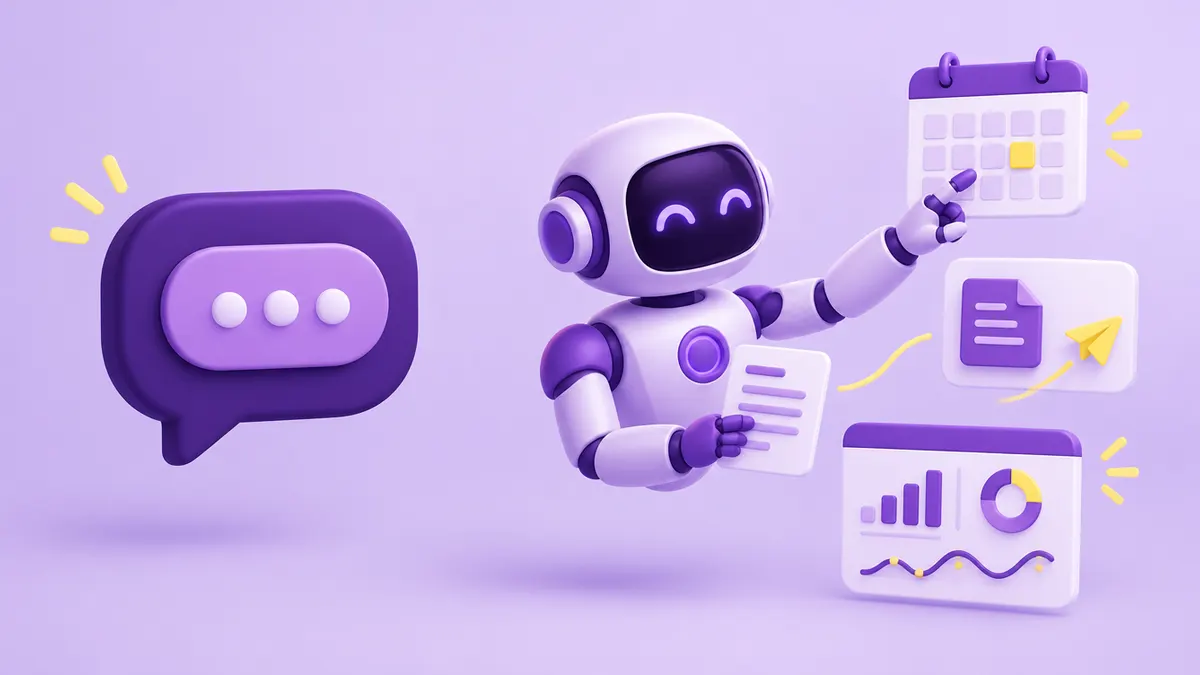
"Chatbot" and "AI agent" are often used as if they meant the same thing. They do not, and the difference affects what you get, what it costs to build and how much care it needs once it is live. Here is a plain way to tell them apart.
What a chatbot does
A chatbot holds a conversation. A good one is grounded in your own documents and data, such as policies, product information and FAQs, so it answers from your content rather than from general knowledge.
Its job ends at the reply. It reads a question, finds the answer and writes it back. It does not change anything in your systems. When the conversation needs something done, such as a booking, a refund or an update to a record, it hands over to a person.
What makes something an agent
An agent can also converse, but it is built to complete a task, not just to answer. Three things set it apart:
- Tools. It can call functions you give it: look up an order in the CRM, check a calendar, read an uploaded document or query a database.
- Actions in systems. It can change things: create a lead, book an appointment, open a ticket, update a status or send a follow-up message.
- Several steps towards a goal. It decides what to do next, within limits you set, until the task is done or it needs a person.
Take a property enquiry on WhatsApp. A chatbot can answer questions about available units. An agent can answer, ask qualifying questions, book a viewing in the calendar, create the lead in the CRM and pass the conversation to a salesperson with a summary.
Guardrails and approvals
Because an agent acts, it has to be designed differently. In our projects we usually build in:
- Narrow permissions. The agent gets only the tools and data the task requires, read-only wherever possible.
- Approval steps. Actions that are costly or hard to reverse, such as discounts, refunds or changes to contracts, wait for a person to approve them.
- Human handover. A clear route to a person when the agent is unsure, when a customer asks for one or when the conversation leaves its scope.
- A record of every action. Each step is logged and dated, so you can always see what was done and why.
- Testing on real cases. Including the way customers actually write, in Arabic, English or a mix of both.
When a simple chatbot is enough
An agent is not always the better choice. A chatbot is often the right starting point when:
- The questions are repetitive and the answers already exist in documents.
- The next step is always a person anyway.
- The systems behind the conversation cannot yet be connected.
- You are not ready for automated actions in this process.
Starting with a chatbot is not a lesser decision. It builds the knowledge base, the tone and the conversation history that an agent will need later, and many projects grow from one into the other.
A useful question to ask
After the conversation ends, what has to happen next, and who does it today? If the answer is "someone copies the details into a system", an agent is worth considering. If the answer is "nothing, the customer just needed information", a well-grounded chatbot may be all you need.
To work out which fits your process, book a free 30-minute consultation, or describe the challenge in the AI solution designer on our homepage.